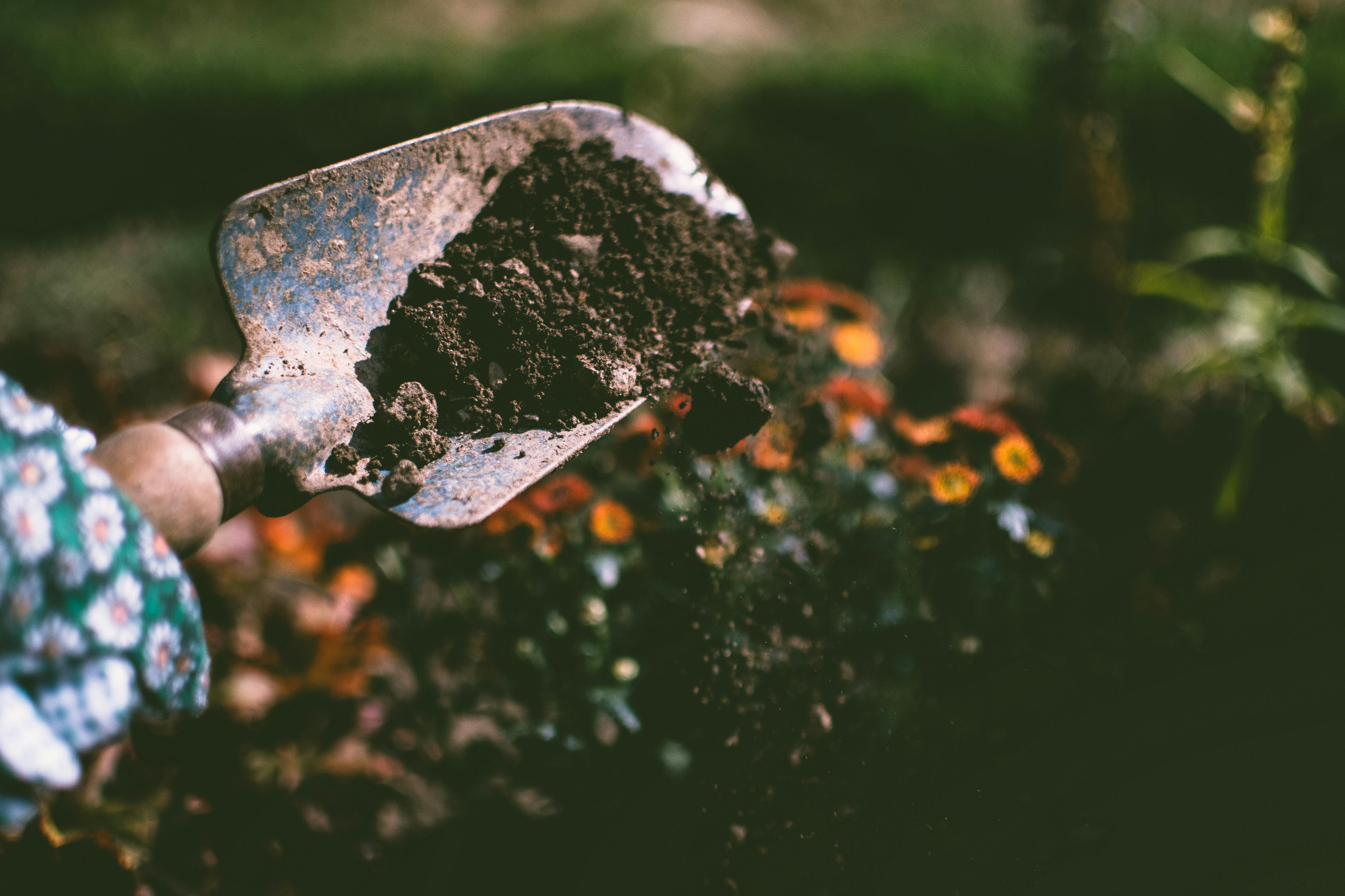
The Everlasting Wisdom of Soil
The image we have of gardening is somewhat deceiving. Having only started gardening a couple of years ago, the image I had of gardening was that of a woman with gray hair kneeling over a rose bush wearing clean gardening gloves and holding a spade. I had Hollywood to thank for the misconstrued and misogynist idea that not only was gardening solely for grandmothers, but that this meant it was gentle, methodical, full of flowers, and maybe sometimes, the occasional weed.
Boy, was I wrong.
In reality, gardening is anything but gentle or methodical. It is taxing on the body and --if you're of an impatient nature-- on the mind. It can be chaotic, certain things growing without a hitch and others with every hitch imaginable. Sometimes you plan everything perfectly, and the weather has different plans. It can be fury-inducing.
And yet, the dirt is worth it.
Beyond the pain, the uncertainty, and the chaos, there is first the dirt. And once you put your hands in the Earth, there is a remembering that, if you allow it, will simply happen. It is not just dirt, it is everything we’ve forgotten in our distance from it.
Soil is teacher, a mirror, and archive.
As I dig in the garden behind the centuries old house I live in, finding bits of ceramic, stone, glass, or brick is like finding glimpses into the history of its previous inhabitants. Sometimes I find bones and skeletons of what are most likely large rodents or countryside cats. There are decomposed roots, ash, bacteria, seeds: all telling a story of different forms of life. Some who were born from the same soil they died in; some who chose it -- perhaps accidentally-- as their last resting ground. An archive of those who died here and those who still remain.
Digging through soil and going through the different bits that make it up is connecting to all of time through present observation, the debris of the past, and planting hope for the future. Soil works slowly, it can never be rushed. It must go through its cycles of decomposition and regeneration —a stark contrast to the productivity culture we are prisoners of. In working with the rhythm of the Earth, we gain the space we lose when we expect instant outcomes. Generously, it reminds us of the reality behind true transformation and how it requires rot and rest. Even if we are impatient with It, dirt remains a patient teacher.
Soil reminds us that like it, we cannot thrive alone. Just as it needs fungi, bacteria, its creepy crawler friends, and roots that stretch out like veins to co-create it, so do we need the people, plants, and animals around us to be made whole. A friendly mirror, it reflects back to us our interconnectedness and beckons our return to it.
We may have distanced ourself from soil, but we cannot forget. We bury our dead in it and dig our heels in it when we need to feel grounded. Like a breath coming back to the lungs, so must we always return to the soil. It holds the cycle of life within it, decay being a manifestation not of the end, but of a beginning anew.
Gardening is an act of strengthening, and tending to the soil an act of humility. It demands a commitment from our bodies and our minds, but with (quite literally) fruitful returns. It is nothing if not forgiving in its regeneration, kind on its embrace, and generous with story and memory. Reconnecting with the land is an act that takes our entire selves because it is where we come from and will end up. In many ways, it is our creator. The Earth is not simply the land we walk on but the wise Elder. She has answers to so many of our questions, if we would just take a minute to slow down, and listen up.
Post a comment